
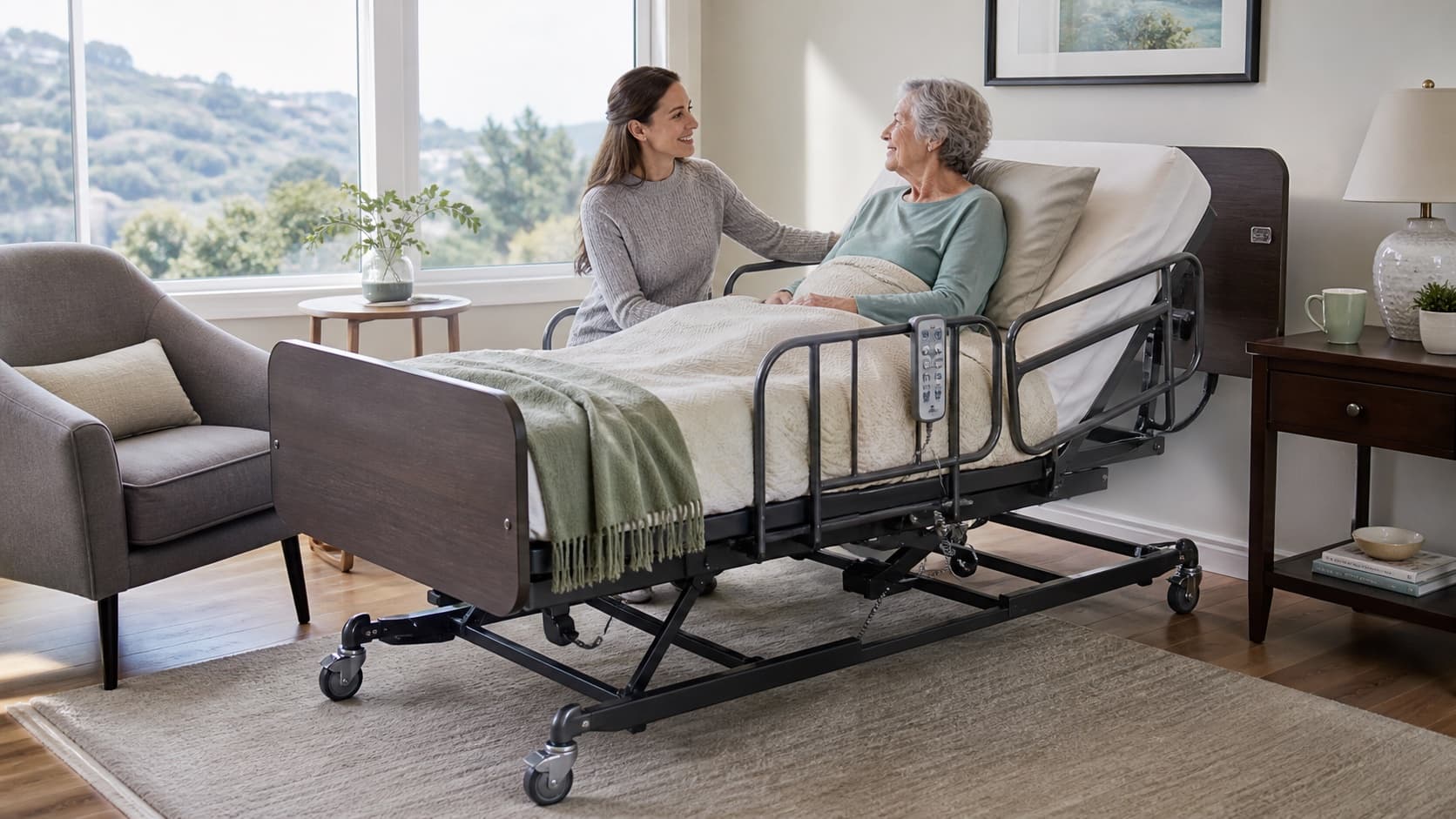
A hospital bed for home can turn a difficult care setup into a more practical space for rest, personal care, and daily routines. Unlike an ordinary mattress or consumer adjustable bed, a medical bed is designed around positioning, caregiver access, compatible support surfaces, and equipment that may be needed during recovery or long-term care.
Why families consider a hospital bed for home
A standard bed can become difficult to use when someone needs frequent position changes, assistance with transfers, or care from more than one side of the mattress. A hospital bed creates an adjustable work and rest surface that can be placed with the room, caregiver, and care plan in mind.
The decision is not based on age alone. It is usually driven by mobility, the expected length of recovery, the amount of caregiver assistance required, and whether the current bed supports safe routines.
Powered positioning can make daily routines simpler
Full electric beds commonly adjust the head, knee section, and overall deck height with a hand control. Semi-electric beds typically power the head and foot sections while using a manual crank for height. These adjustments can make it easier to sit upright for meals, settle into a comfortable resting position, or prepare the bed for clinician-directed care.
Positioning should always follow the individual care plan. People with breathing, swallowing, circulation, pain, post-surgical, or pressure-injury concerns should use guidance from a qualified healthcare professional.
Adjustable height can improve caregiver access
A powered height adjustment lets a caregiver raise the sleep surface for tasks such as changing linens, assisting with hygiene, or following a repositioning routine. The bed can then be returned to the recommended resting or transfer height.
A hospital bed does not make every transfer safe by itself. The room layout, mobility aids, footwear, supervision, and the person’s abilities all matter. Ask the care team to recommend an appropriate transfer approach.
The mattress and accessories are part of the system
The frame is only one part of a home hospital bed setup. Mattress width, length, depth, weight capacity, rails, and accessories must be compatible. Foam, alternating-pressure, and low-air-loss surfaces serve different needs and should be selected around the care plan and the bed manufacturer’s requirements.
The FDA recommends assessing hospital beds used in home care for entrapment risk. Bed rails are not automatically the right choice for every user, and soft or mismatched mattresses can create unsafe gaps. Professional setup and periodic reassessment are important when needs change.
Renting can help when the timeline is uncertain
Rental is often useful for discharge, post-surgical recovery, hospice support, visiting family, or any situation where the length of need is unclear. Purchasing may be more practical when the bed is expected to remain in the home for an extended period or when a specialized configuration is required.
Compare the complete cost and service package. Delivery, assembly, mattress choice, accessories, pickup, maintenance, and the ability to change equipment can matter as much as the monthly or purchase price.
Questions to answer before delivery
A short room and care review can prevent delays on delivery day. Share doorway, hallway, stair, and elevator details with the supplier, and confirm that the chosen room has a grounded outlet and enough working space around the bed.
- Who will use the bed, and what positioning functions are needed?
- Is the need short term, changing, or likely to be long term?
- What mattress or pressure-relief surface has been recommended?
- What is the user weight and required sleep-surface width?
- Can the delivery team reach the room safely?
- Who will receive setup instructions and ongoing support?
Sources & further reading
The takeaway
A hospital bed for home can make positioning, caregiver access, and daily routines more manageable when the equipment matches the person and care plan. Compare rental and purchase options, choose compatible components, and arrange professional delivery and setup before the bed is needed.

